By Brett Berk
Driving McKeel Hagerty’s 1967 911S through the streets of Detroit revealed something at once compelling and disconcerting. The Polo Red coupe looks like other, well-restored, well-used Ss from the era. But, whether driving up Woodward Avenue, or pulling onto I-94 and merging into a looming slough of contemporary SUVs, the car just seems to be somehow more generous than I expected.
Own a Porsche? Join the largest single marque car club in the world. Over 150000 of your fellow Porsche owners already have. Join PCA Today!
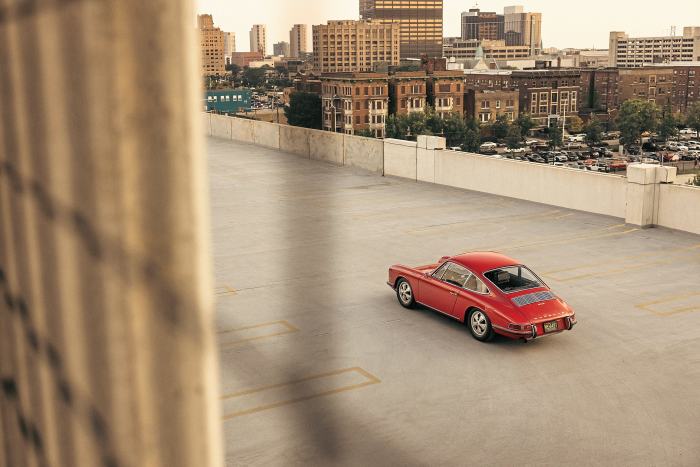
Photo Credit: Courtesy of Porsche Club of America
McKeel tried to explain why. “The problem with any early 911, they’re so cool, but they don’t have a lot of power,” he said. “So I upgraded the displacement to 2.7, but it was done pretty stealthily. It was a two-liter motor upgraded to 2.7 and kind of strengthened with some of the internal mechanicals. But you can’t tell. It doesn’t have a lot of external evidence that it has been upgraded. But when you hear it? It’s a sportier exhaust, and it’s like, oh boy, you can tell there’s something in this, and it just pulls and pulls and pulls when you get on it.”
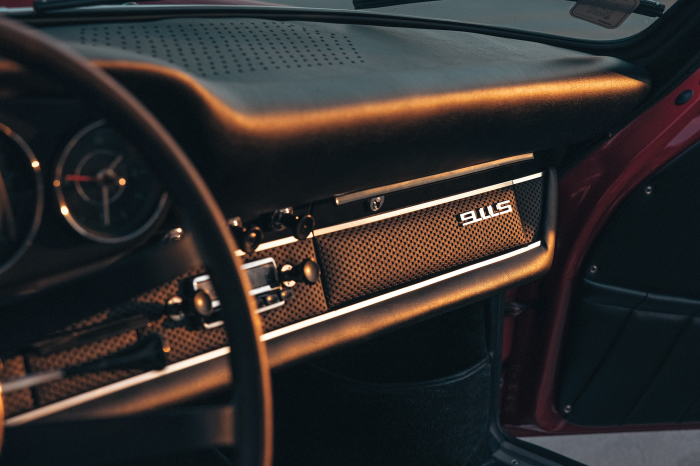
Photo Credit: Courtesy of Porsche Club of America
But this isn’t all of what makes McKeel’s S uncanny. Not even nearly. The root of the car’s uniqueness, its communicativeness, lies in its history. Hagerty has owned the car for more than 40 years. Since he was 13. “We actually started talking to the owner when I was about 11,” he said.
His ownership of #307148S has its origins in a family tradition. When his sisters, both older, became young teens, their dad, Frank, helped each of them buy an old car with the goal of fixing it up under his guidance, so that by the time they got their license, it would be ready for them to drive. His eldest sister, Kim, chose an early 1960s Chevy Corvair Lakewood wagon. His sister Tammy chose a different air-cooled rear-engine vehicle, one that more piqued his interest: a 1960 Porsche 356 B Roadster.
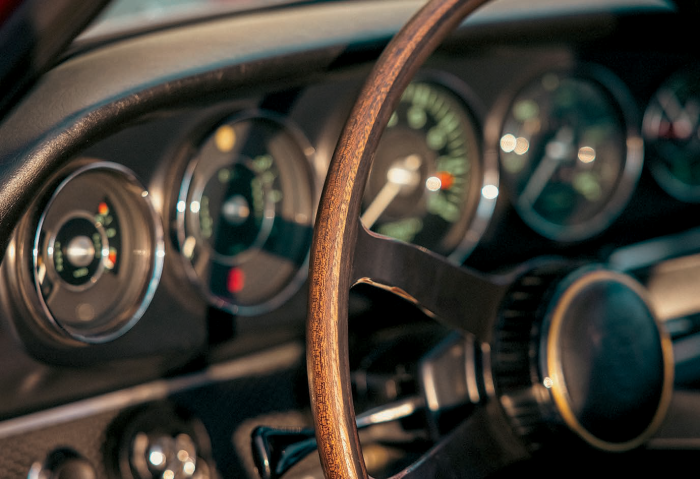
Photo Credit: Courtesy of Porsche Club of America
This car imprinted on McKeel. “It was being restored in the garage when I was a kid, and I got to help out,” he said. “And I became fascinated by that Porsche story and history. And I knew that to get a Porsche of my own would be pretty epic.”
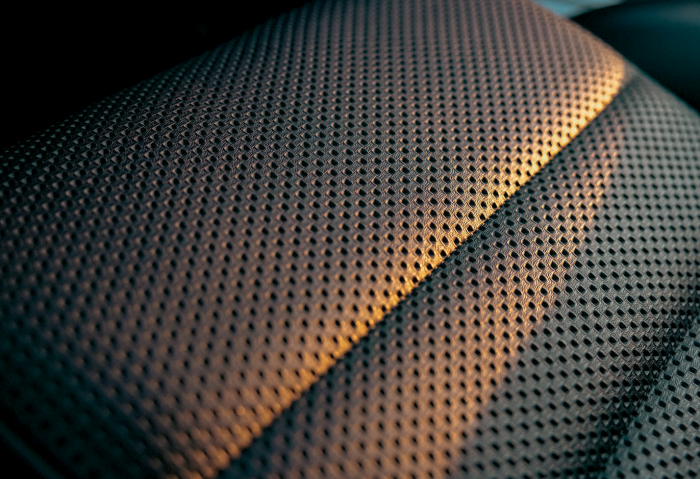
Photo Credit: Courtesy of Porsche Club of America
His father spotted what would become his car, locally, in Traverse City, a lakeside resort town in the pinkie tip of Michigan’s hand-shaped lower peninsula. “My dad knew that there were these two Porsches sitting outside, and they were just sinking into the ground,” Hagerty said. But the curmudgeon who owned them wouldn’t sell. Still, they began the press. “Like, just go ing out, stopping by,” Hagerty said. No result.
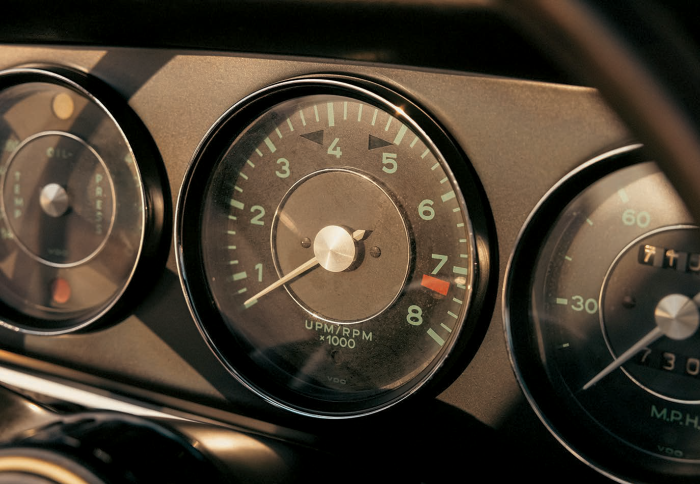
Photo Credit: Courtesy of Porsche Club of America
Finally, one Christmas, the owner called and said he’d sell, but they needed to come right away. They did. Handing over 500 1981 dollars, McKeel, who had just turned 13, was now the proud owner of a barn-find Porsche, but one stored without the benefit of a barn. In northern Michigan, this means one thing. Rust. “Though all Porsches were rusty at that point,” he said.
McKeel Hagerty’s 1967 911S has had two restorations: one completed by his teenage self in the 1980s, another by professionals decades later. The second yielded a superior car, but the first, superior memories.
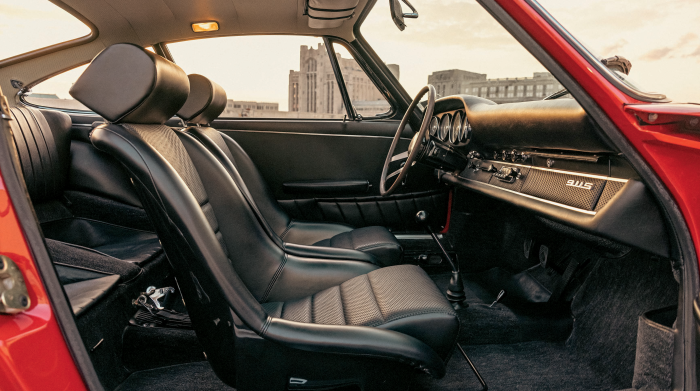
Photo Credit: Courtesy of Porsche Club of America
Frank Hagerty wasn’t a professional wrencher. He was an insurance man. But he was handy. “He was a shade-tree mechanic. But he could kind of work on and do anything,” McKeel said. Still, it took a year after the purchase for them to get started on the 911S, though that didn’t stop McKeel from engaging with the car. “We had this storage building,” he said. “And I would
go sit in it as a boy with my friends and pretend like we were driving.”
Eventually, they dragged the car into the garage. McKeel labored under his father’s guidance, but that was really the only resource he had. “I did all the bodywork myself, all the mechanical work,” he said. “The funny thing is, we did not have anything like a shop manual. I mean, this was just: take it apart, clean it up, put it back together, fix every part you could.” This was economizing, as much as a learning experience. “The parts were so expensive,” he said, noting that even a turn signal assembly ran $800. “Everything we bought, we bought from Stoddard. That was the Porsche aftermarket parts place,” he said.
“I think that idea that, cars like this are, they’re not just a machine. They’re kind of a language between people—it was my language between me and my dad. So they kind of symbolize a lot more.” — McKeel Hagerty
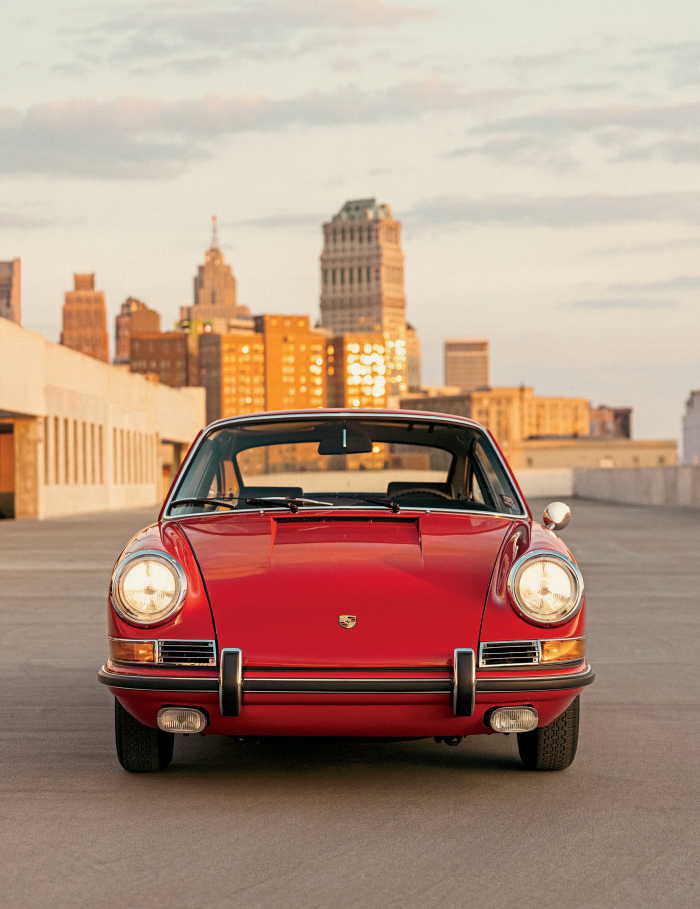
Photo Credit: Courtesy of Porsche Club of America
Given the ad-hoc process, and his limited resources, young McKeel made mistakes. “There were a lot of the sort-of-mythical leftover parts, things where you’re like, Oh, what’s this? What did this go to?” he said.
He also gave up his car’s original transmission. “I had the mechanical ability, with my dad, to fix the engine, but not the transmission, which had some bad gears,” he said. Stoddard offered a transmission swap program: send in a battered box, and they’d return a reconditioned one. “I kind of wish I hadn’t done that, because now that original gearbox is long gone,” he said.
He also made an error with the paint. “I felt like, in my study of Porsche, Porsches weren’t red. Italian cars were red. Porsches were some other color. So I painted it black lacquer because I thought it looked better,” he said. “And it was probably a mistake because it wasn’t authentic to the car, and the lacquer didn’t hold up very well.”
But the most memorable error involved the body work. “No one apparently had invented a rotisserie yet,” he said. “So, all of the underbody work on this car was me lying on a creeper underneath it, which is really a painful way to work on a car.”
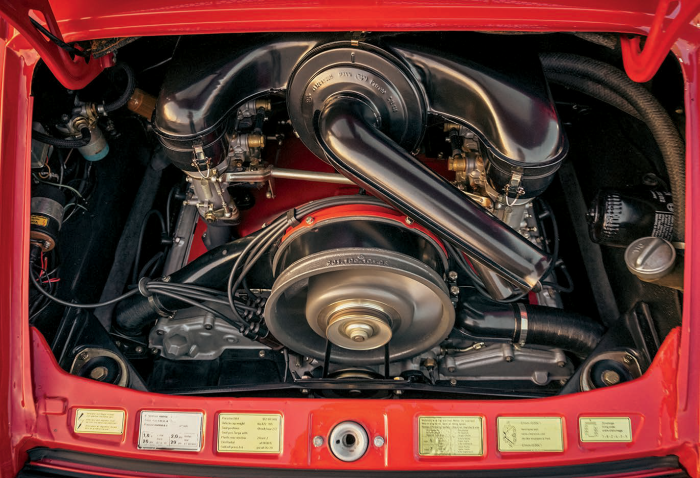
Photo Credit: Courtesy of Porsche Club of America
Eventually, they completed the process. “I fired it up and took it for a drive,” he said. “Needless to say, it was one of the happiest days of my life. My dad and I hugged each other. And we cried.”
McKeel drove the car all through high school, but there wasn’t exactly a local culture of vintage import fanatics. “I was such an anomaly,” he said. Still, he took the car everywhere. It went to homecoming, it went to prom, it went to graduation. “It was just kind of part of my identity,” he said. “And, you know, people kind of knew me by it.”
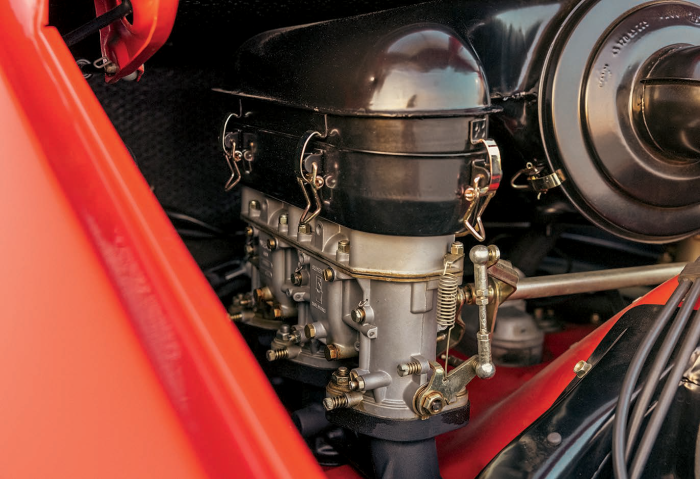
Photo Credit: Courtesy of Porsche Club of America
Because he was a teenager, he continued making mistakes. The most memorable one occurred during a date
with a girl he really liked. “Nobody told me how to install the valve-cover gaskets, so I just did not know what I was doing,” he said. He was driving with this girl on a local lakefront parkway when the gasket failed. “When that happens, it dumps huge amounts of oil on the exhaust system. So this is not like, oh, there’s something wrong with the car. This is like, clouds of smoke billowing out of the back and catastrophic engine failure is happening imminently.”
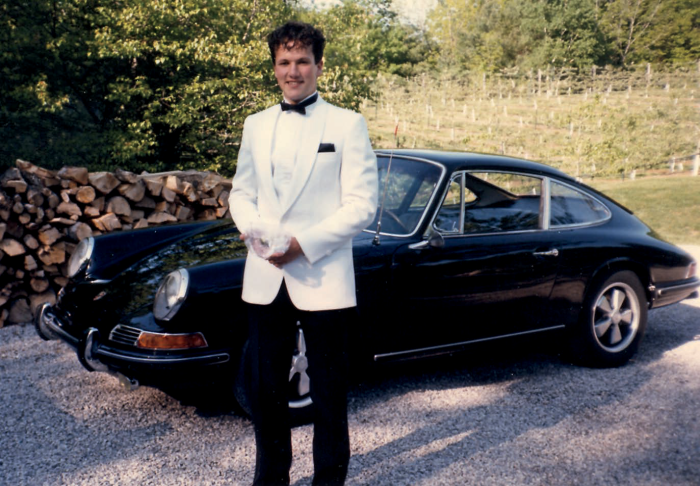
Photo Credit: Courtesy of Porsche Club of America
The 911S was black lacquer when Hagerty drove it to his high school prom. During the car’s second restoration, it was returned to its original Polo Red, but its engine was bored out to 2.7 liters and hotted up.
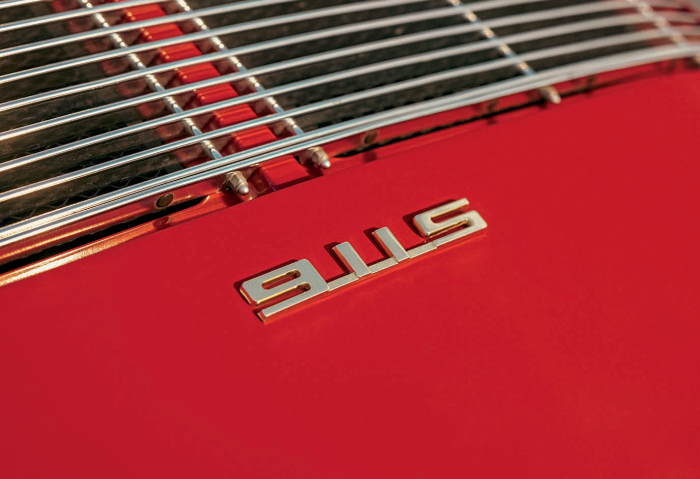
Photo Credit: Courtesy of Porsche Club of America
McKeel eventually went to college—in Malibu, near some of the world’s best roads. Because they wanted him to focus on his studies, his parents wouldn’t let McKeel bring the Porsche. In an effort to earn it back, he achieved a solid 4.0 for two years, but they wouldn’t budge. “My dad kept saying, ‘You don’t want that out there,’” he said. “Something’s going to happen to it. You’re not going to have the tools.”
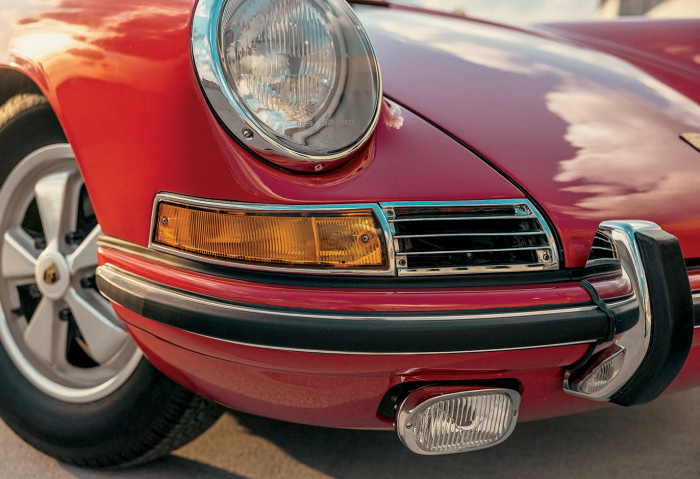
Photo Credit: Courtesy of Porsche Club of America
After college, McKeel attended graduate school in New York and Boston, but still the car remained home in Michigan. “I just kind of fell away from it during that time,” he said. Eventually, he returned to Traverse City to work in the family business. By that time, the S’s paint was getting tired, and his shoddy restoration work was starting to bug him. “I realized, I can’t live with it in that condition anymore,” he said. He decided to have it restored again, returning it to its original color, and adding needed upgrades.
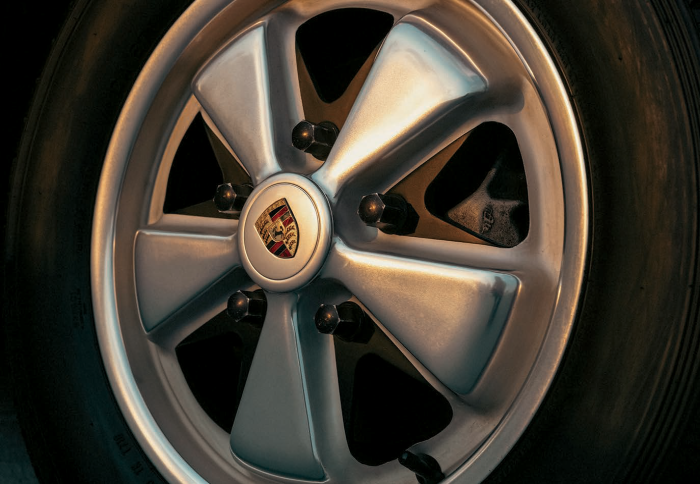
Photo Credit: Courtesy of Porsche Club of America
Hagerty has three daughters, and though they’re all interested in old cars, he hasn’t undertaken any father child restoration projects. If he did, he has ideas about what he’d do differently.
“I think I probably would bring in some additional help. Like, here’s a really great body person. Let’s learn from him how to weld, rather than just kind of going for it with the blowtorch,” he said. “Same thing with the engine. I’d say like, I don’t know how to tune six Weber carburetors. Let’s ask this guy to show us how to do it right.”
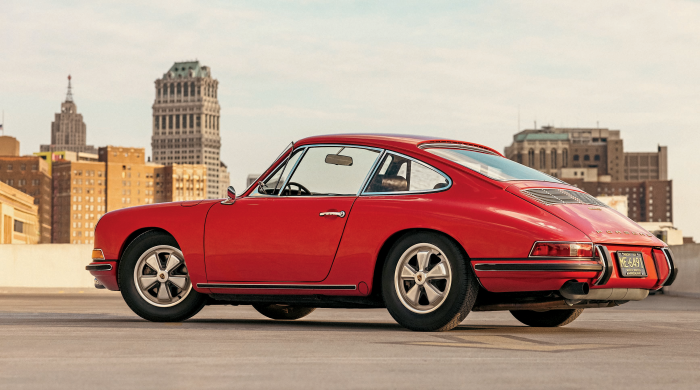
Photo Credit: Courtesy of Porsche Club of America
Driving the 911S through the streets of downtown Detroit during the inaugural Detroit Concours d’Elegance—sponsored by Hagerty’s namesake car insurance company—proved its historicism, as well as its contemporary merits.
Even with a 1958 Speedster, a 1962 Roadster, and a Taycan in his stable—and he would love to add a 2.7 RS or a 550 Spyder—the 911 remains his forever favorite. “It’s the first car I drive in the spring and the last one I drive in the fall,” he said.
And though his father passed away in 2014, the 911 remains a constant source of connection. “I think that idea that, cars like this are, they’re not just a machine. They’re kind of a language between people—it was my language between me and my dad. So they kind of symbolize a lot more,” he said. “Maybe I just have some sort of broken nostalgia gene that I’m just cursed with. But I’ve just lived it out with this car, year in and year out. We’re going to grow old together. I hope somebody drives it in my funeral procession,” he said. “It’s just like my right arm. I don’t know how to even describe how close I am to it.”
His 911S is now a mid-six-figure car, but McKeel doesn’t pamper it. In recent years, he’s taken it on rallies up Pikes Peak, and on Highway 1 drive from L.A. to San Francisco. He even has plans for a run down the Tail of the Dragon, in the Smoky Mountains.
Hagerty is not precious about his cars—after all, he let me drive this one. “Just drive the wheels off and have fun. Enjoy it,” he said. “No reason to baby a car. Now, my whole view of that is, if you’re going to drive in a rally, get the stone chip.”
Photo Credit: Courtesy of Porsche Club of America
As I floored the car, wending through the potholed streets of downtown Detroit, where a Formula 1 race was held in my childhood, I tried to heed this advice. It was a beautiful fall day. I rolled down the windows. I downshifted. I hit the gas. I wove in and out of traffic, steering with the throttle. I was one person in a handshake with everyone who had driven it before, who had cherished it, and cared for it, and lavished it with love. I felt joy.
Own a Porsche? Join the largest single marque car club in the world. Over 150000 of your fellow Porsche owners already have. Join PCA Today!